
Updated November 14, 2026
Apple’s first foldable iPhone has arrived, but its launch hasn’t been entirely smooth.
Just days after the iPhone Duo went on sale on October 23, reports began appearing online of inner displays cracking near the hinge, sometimes after only a few hours of use. Some owners described unusual resistance while unfolding their devices, followed by a popping sound and visible screen damage.
Apple has acknowledged the issue, saying that a small number of units are affected and that customers experiencing display problems should contact AppleCare for a replacement.
So, should you be concerned about buying the iPhone Duo?
Our recommendation: If reliability is your top priority, waiting is the safer choice. The early failures are real, but there isn’t enough evidence to conclude that the problem affects most devices or that every iPhone Duo will eventually develop a screen defect.
Here’s what we know, what remains uncertain, and what prospective buyers should consider.
What’s Happening With iPhone Duo Screens?
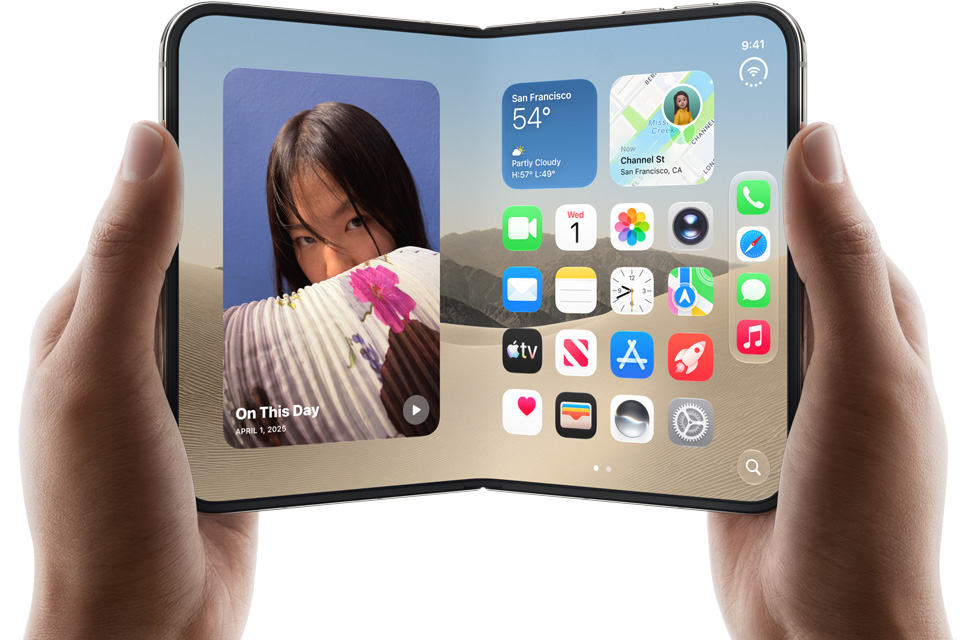
The iPhone Duo is Apple’s first foldable smartphone, featuring a 7.6-inch inner display and a 5.4-inch outer screen.
Starting at $1,999 in the United States, it is also one of Apple’s most expensive iPhones.
Unlike a traditional smartphone, the Duo has a flexible inner display supported by an intricate hinge mechanism. That design gives users a much larger screen when the device is unfolded, but it also introduces mechanical complexity.
Shortly after launch, some owners reported similar failures involving the folding display.
The most commonly described symptoms include:
- Cracks along the center crease: Damage appearing where the inner screen folds.
- Bright white or colored lines: Display artifacts extending across part of the screen.
- Hinge resistance: The device feeling unusually stiff or difficult to unfold.
- Popping or cracking sounds: Unexpected noises immediately before a screen malfunction.
- Raised areas near the crease: Small bumps or pressure points visible beneath the display.
One Australian owner reported that their device broke within approximately six hours of purchase, after fewer than 20 folds. The user said the screen cracked during an ordinary opening motion without obvious external damage.
Similar reports appeared in other markets, including the United States and China.
Bloomberg subsequently reported that it had independently verified multiple complaints involving damaged devices.
These cases are concerning, particularly for a premium smartphone that buyers expect to use for several years.
However, reports of failures don’t automatically establish how widespread the underlying problem is.
What Has Apple Said About the iPhone Duo Issue?
On October 26, Apple publicly acknowledged an inner-display issue affecting a small number of iPhone Duo devices.
The company directed affected customers to AppleCare to arrange replacements.
Apple also indicated that the problem tends to appear relatively soon after users begin using an affected device.
That’s an important distinction.
The company’s statements suggest that the reported failures may involve a limited group of defective units rather than every device eventually failing through normal use.
However, Apple has not publicly disclosed:
- The exact number of affected devices.
- The percentage of units experiencing failures.
- A confirmed technical explanation.
- Whether particular production batches are more vulnerable.
- Whether any manufacturing changes have already eliminated the problem.
As a result, buyers still lack independent, long-term data about the device’s durability.
Apple’s replacement response is reassuring, but it doesn’t completely answer questions about reliability over months or years of everyday folding.
Why Might the iPhone Duo Hinge Be Damaging the Screen?
One of the most useful technical investigations comes from repair specialists at iFixit.
In its October 25 teardown, iFixit examined the iPhone Duo’s internal design, including the hinge, display layers, and supporting components.
The investigation identified a possible source of mechanical stress near the center of the foldable display.
The Possible Hinge Support Problem
The iPhone Duo’s hinge contains several moving components designed to support the flexible display as the device opens and closes.
iFixit suggested that a central support component may not always retract as intended during folding.
If a supporting component remains in the wrong position, it could create concentrated pressure underneath the delicate OLED panel.
That could help explain why several damaged screens show similar patterns near the center crease.
Importantly, this remains a technical hypothesis rather than a confirmed diagnosis.
Apple has not publicly identified that component as the cause, and the available evidence doesn’t establish whether every reported failure has the same origin.
Why Foldable Screens Are More Complicated
Traditional smartphones use rigid display assemblies.
Foldable phones require flexible screen layers, carefully controlled bending, and moving mechanical components.
Every opening and closing cycle places some mechanical stress on the assembly.
Manufacturers attempt to manage that stress through hinge geometry, supporting structures, protective layers, and specialized materials.
The existence of a foldable display doesn’t mean a device is inherently unreliable. However, a folding mechanism introduces additional potential failure points that conventional smartphones don’t have.
How Common Are iPhone Duo Screen Failures?
This is the question that matters most to prospective buyers, and the available evidence doesn’t yet provide a definitive answer.
Apple describes the affected population as small.
Meanwhile, reports from Reddit, technology publications, and repair specialists confirm that some genuine failures have occurred.
Both observations can be true.
A relatively small defect rate can still produce many visible complaints when a high-profile device sells to customers around the world.
Online discussions also tend to attract users who have experienced problems, which makes them an unreliable way to estimate the percentage of defective devices.
There is another complication: some images circulating online have reportedly been AI-generated or otherwise misleading.
That’s why individual photographs and viral posts should not be treated as a substitute for verified failure statistics.
Have New Complaints Continued?
Yes. Reports have continued beyond the initial launch weekend.
During November, users in iPhone Duo communities have described additional cases involving raised hinge areas, unexpected resistance, and broken inner displays.
For example, a November 9 Reddit post described an owner whose replacement device reportedly developed screen damage after a previous device had shown a hinge-related problem.
Such accounts deserve attention, but they remain individual, unverified user reports. They do not establish a general failure rate or prove that all replacement devices share the same defect.
The most accurate conclusion today is that the issue is real, its prevalence remains uncertain, and longer-term reliability evidence is still limited.
What Happens If Your iPhone Duo Screen Breaks?
Apple has publicly offered replacements for devices affected by the acknowledged inner-display problem.
According to reporting by 9to5Mac, eligible customers experiencing this specific defect do not need to have purchased AppleCare+ to request a replacement.
However, customers should not assume that every type of screen damage will receive a free replacement.
Accidental damage, manufacturing defects, and ordinary wear may be handled differently under Apple’s warranty and service policies.
What Should You Do If You Notice a Problem?
If you experience unusual hinge resistance or display damage:
- Stop forcing the hinge. If the device becomes unusually difficult to open, don’t continue applying pressure.
- Document the problem. Take photographs or a video showing visible damage or abnormal hinge behavior, if you can do so safely.
- Back up your data. Use iCloud or another supported backup method while the device is still operational.
- Contact Apple Support or AppleCare. Explain the symptoms and whether the device has experienced any impact or accidental damage.
- Ask about replacement availability. Confirm the expected service process before sending in the device.
It’s also worth keeping your purchase receipt and any previous service records.
If you disagree with a damage classification, ask for a clear explanation and request further review through Apple’s support process.
How Expensive Is an Out-of-Warranty Repair?
This is where the Duo’s premium design becomes particularly important.
According to iFixit’s teardown, replacing the inner display without applicable coverage can cost approximately $999 in the United States.
That’s roughly half the starting price of the phone.
iFixit awarded the Duo a provisional repairability score of 5 out of 10, describing it as the most repairable foldable the organization had examined at the time.
However, that score doesn’t mean repairs are inexpensive or simple. The inner display and hinge remain particularly complicated components.
For buyers concerned about accidental damage, checking AppleCare+ coverage, deductibles, and exclusions before purchasing is sensible.
The Screen Isn’t the Only Reason to Consider Waiting
Even if your iPhone Duo never develops a hardware problem, there are other first-generation tradeoffs worth evaluating.
1. App Optimization Is Still Improving
The iPhone Duo introduces a different screen layout and usage experience from conventional iPhones.
Some applications need to be adapted for its larger inner display.
Early reviews highlighted apps that didn’t make effective use of the expanded screen, although developers have already begun shipping compatibility improvements.
This situation should improve over time, but it is worth checking whether the apps you use most frequently take advantage of the device.
2. The Foldable Design Isn’t Ideal for Everyone
A foldable phone combines the roles of a smartphone and a small tablet.
That sounds convenient, but it can also change how you use your devices.
For example, users who normally watch videos on a tablet while responding to messages on their phone may find a combined device less convenient.
In November, The Verge interviewed several customers who returned their iPhone Duos despite appreciating the innovative design.
Their concerns included weight, bulk, and whether the larger screen genuinely improved their everyday experience.
These are matters of personal preference rather than manufacturing defects, but they can be just as important in a purchasing decision.
3. Long-Term Durability Remains Unproven
The iPhone Duo has been commercially available for only a few weeks.
That simply isn’t enough time to establish how its hinge and flexible display will perform after years of regular use.
A device that works perfectly during its first month may continue doing so for years. But independent evidence about long-term durability takes time to accumulate.
For cautious buyers, waiting for more extended ownership reports is reasonable.
Should You Buy the iPhone Duo Now or Wait?
The best choice depends on your priorities.
| Type of Buyer | Our Recommendation |
|---|---|
| Early adopter who loves new technology | Consider buying now, with a clear return and support plan |
| Everyday user who prioritizes reliability | Wait for more evidence |
| Someone planning to keep the phone for 3–5 years | Consider waiting for longer-term durability reports |
| Buyer who depends on one phone for work | Prefer a proven device unless the foldable benefits are essential |
| Foldable enthusiast comfortable with repair risks | The Duo may still be worth considering |
| Someone unsure about the form factor | Try it in an Apple Store before purchasing |
Reasons to Buy Now
There are legitimate reasons to be excited about the iPhone Duo.
Its larger inner display offers a different way to browse, read, multitask, and interact with applications.
Apple has also designed iOS 27 specifically to accommodate the folding form factor.
Early reviewers have praised aspects of the hardware, including its hinge feel, display experience, and creative possibilities.
If you’ve been waiting specifically for a foldable iPhone and understand the risks, buying now isn’t necessarily a bad decision.
Reasons to Wait
If you’re mainly looking for a reliable premium iPhone, the calculation is different.
You’re paying approximately $2,000 for a first-generation design with limited long-term reliability data and a documented issue affecting some early units.
Waiting offers several potential benefits:
- More independent ownership reports.
- Greater clarity on the cause of reported display failures.
- Possible manufacturing or service updates, if Apple announces them.
- More applications optimized for the foldable interface.
- A better understanding of repair and ownership costs.
None of these improvements is guaranteed by a particular date, but more information should make the purchasing decision easier.
Five Things to Check Before Buying an iPhone Duo
If you’ve decided to buy the Duo, here are five practical precautions.
1. Test the hinge in person. Visit an Apple Store if possible. Open and close a demonstration device normally and evaluate how the mechanism feels. A smooth demonstration unit doesn’t guarantee reliability, but it can help you understand the design.
2. Check your return window. Apple generally offers a 14-day return period for eligible purchases made directly from Apple in the United States. For qualifying purchases received between November 6 and December 25, 2026, its holiday policy extends returns through January 8, 2027. Certain carrier-financed purchases are excluded, and rules vary by country and retailer.
3. Review AppleCare+ coverage. Understand which situations qualify as manufacturing defects versus accidental damage, and what service fees may apply.
4. Keep a backup phone if possible. Replacement inventory may be limited. Having another device available can reduce disruption if you need service.
5. Pay attention to abnormal hinge behavior. Don’t ignore unexpected stiffness, raised areas, cracking noises, or unusual display lines.
These precautions won’t eliminate the possibility of failure, but they can reduce the inconvenience and uncertainty involved in owning a first-generation foldable.
Frequently Asked Questions
Is the iPhone Duo screen defective?
Apple has confirmed an inner-display issue affecting a small number of units. However, it has not disclosed a general failure rate, and there is no evidence that every iPhone Duo has the problem.
What causes the iPhone Duo screen to crack?
The exact cause hasn’t been publicly confirmed. iFixit has suggested that a component of the hinge support mechanism may create excessive pressure beneath the display in some circumstances.
Will Apple replace a cracked iPhone Duo for free?
Apple has offered replacements for devices affected by the acknowledged defect. However, coverage depends on the circumstances and service assessment. Accidental damage may be handled differently.
Does the iPhone Duo have a recall?
As of November 14, 2026, Apple has not announced a general recall for the iPhone Duo’s reported display issue.
Is the iPhone Duo more fragile than a regular iPhone?
Its folding mechanism and flexible inner display introduce additional mechanical complexity. However, there isn’t enough long-term comparative reliability data to quantify how much more likely it is to fail than a conventional iPhone.
Should I wait for the second-generation iPhone Duo?
If your current phone still works well and reliability matters more than having the newest form factor, waiting for a future generation is reasonable. However, the timing, features, and durability of any successor remain uncertain.
Final Verdict: Should You Wait Before Buying?
For most buyers, we recommend waiting.
The iPhone Duo is one of Apple’s most ambitious products in years, and its foldable design offers genuine advantages.
But the early screen and hinge failures are difficult to ignore, particularly at a starting price of $1,999.
Apple’s acknowledgment and replacement response are encouraging. At the same time, the absence of published failure-rate data and a confirmed technical explanation means some uncertainty remains.
That doesn’t make the iPhone Duo a bad product, nor does it mean most owners will experience problems.
It means buying one today involves accepting more uncertainty than buying a conventional iPhone with an established reliability record.
If you love foldable technology, understand the potential service costs, and have a clear return plan, the Duo may still be an exciting purchase.
If you simply want a dependable premium smartphone that you can use for several years, waiting for more long-term owner feedback is the more cautious choice.
Sources
- Apple — Introducing iPhone Duo
- Reuters — Apple Says It Will Replace iPhone Duo Units Showing Screen Problems
- MacRumors — Apple’s Response to iPhone Duo Display Cracking Reports
- iFixit — iPhone Duo Teardown and Display Investigation
- The Verge — Not Everyone Is Loving Their New iPhone Duo
- Apple — Returns and Refunds Policy
Leave a Reply